“You are never too old to climb new heights—especially when the mountains themselves invite you to the top of the world.”
📝From My Heart at 11,000 Feet
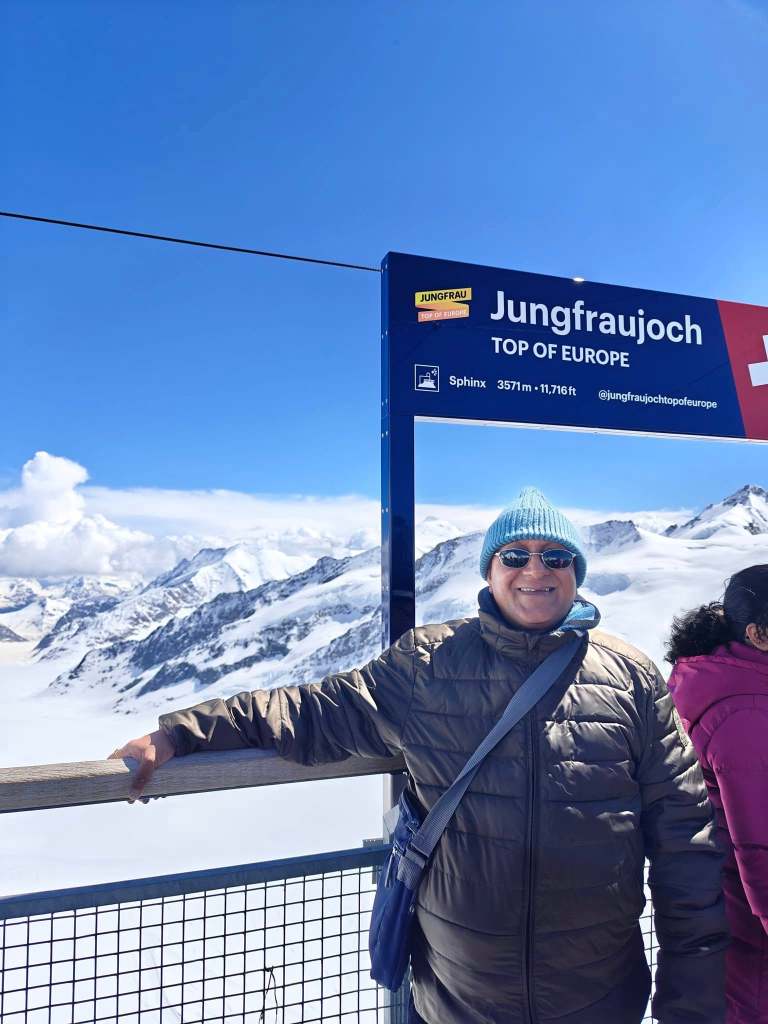
Nestled high in the heart of the Swiss Alps, Jungfrau, famously known as the “Top of Europe,” sits at a breath-taking altitude of over 11,300 feet (3,454 meters) above sea level. Reaching this majestic destination is an experience in itself, whether by the cogwheel train that tunnels through mountains or the panoramic windows that reveal snow-covered landscapes with every turn.
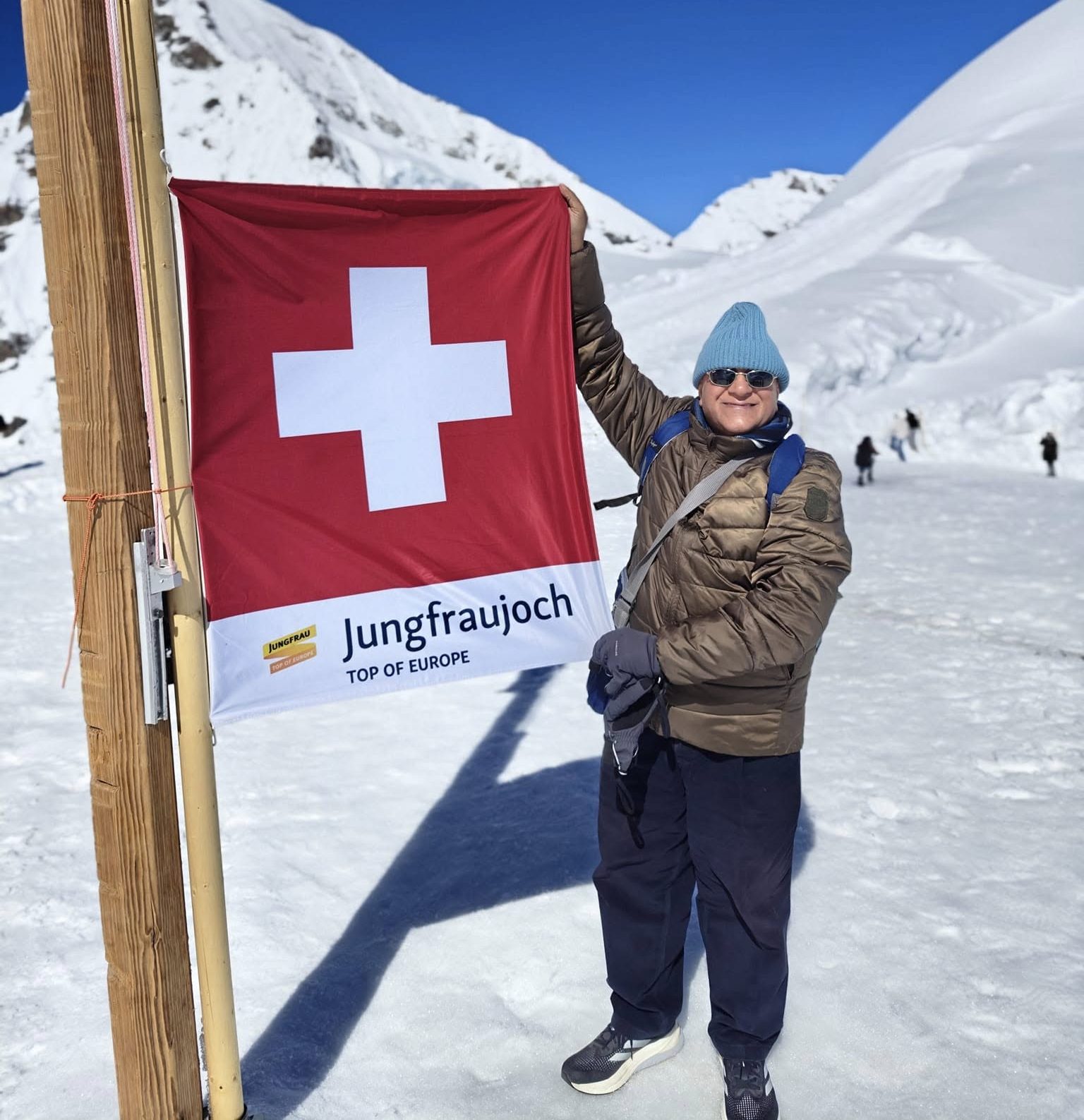
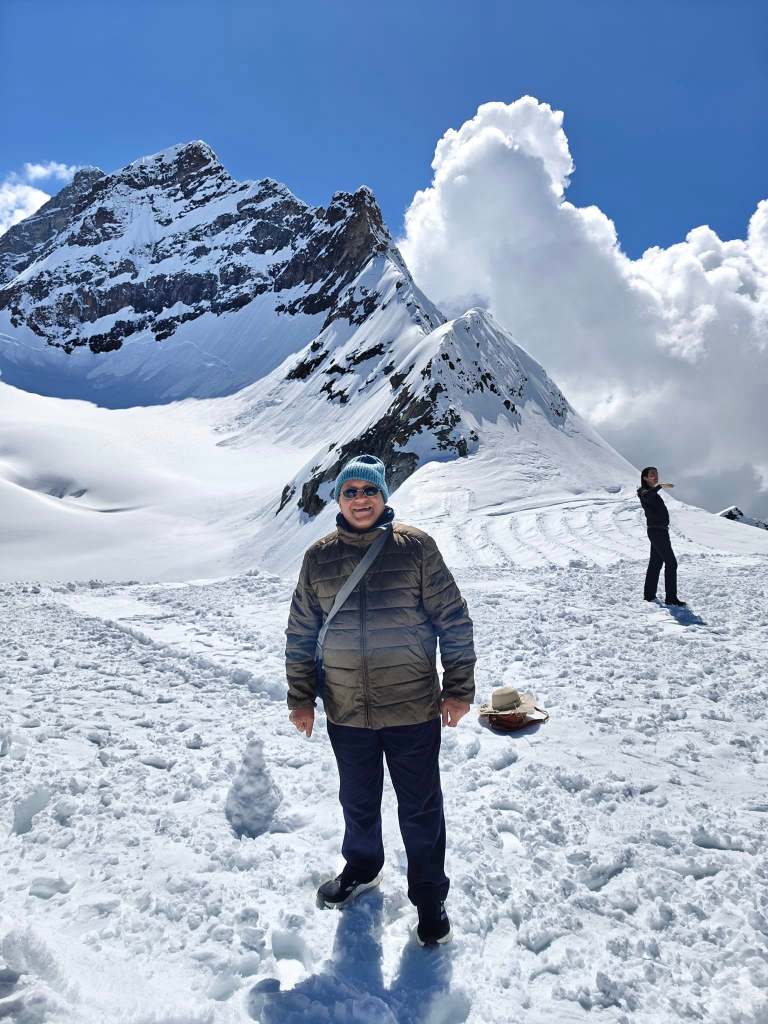
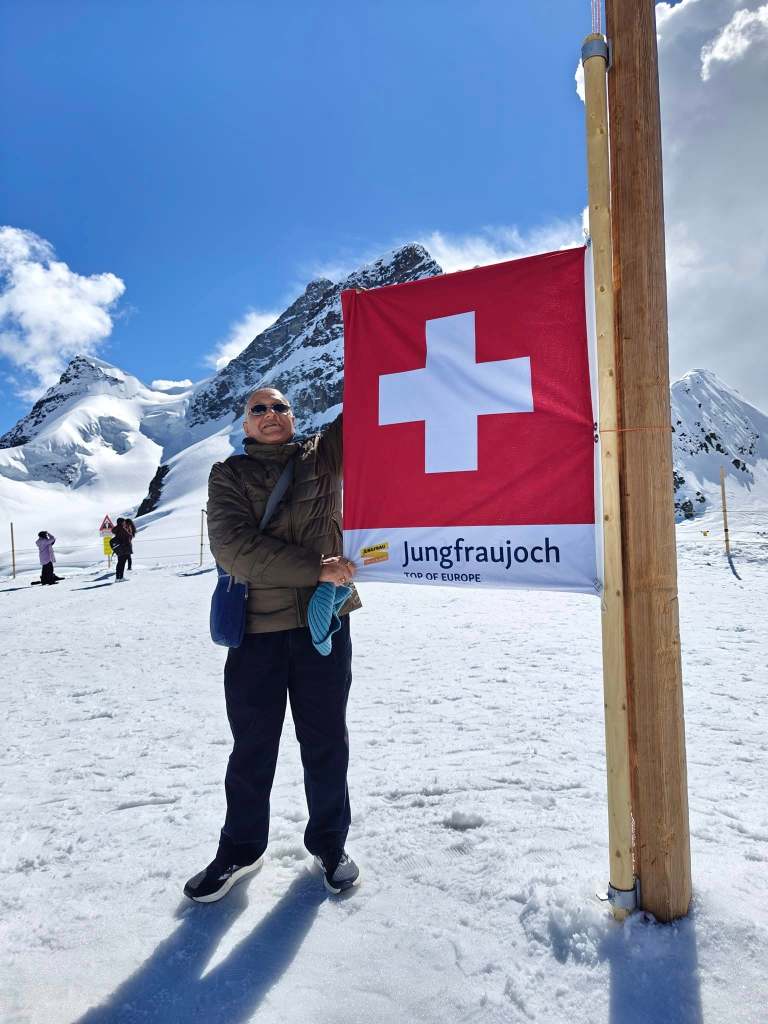
As you step out onto the Sphinx Observation Deck, the cold immediately greets you — temperatures often hover around -7 to -8°C, even in summer — but so does an overwhelming sense of wonder. Before you stretches a sensational view: an endless expanse of icy white glaciers, the Aletsch Glacier flowing like a frozen river beneath the peaks, and the mighty Swiss flag fluttering proudly against the deep blue sky on the glacier plateau.
Here, in the stark silence of the high Alps, one can truly feel the raw, untamed character of nature — bleak, cold, and yet beautifully alive. It’s not just a visual spectacle; it’s a moment that touches something deeper. The wind may be merciless, but it carries with it a whisper of timeless grandeur.
For a traveller in their golden years, standing at Jungfrau isn’t just about reaching a geographic high point — it’s about embracing life’s peaks with awe, courage, and gratitude.
❄️ Ice Palace & Alpine Wonders
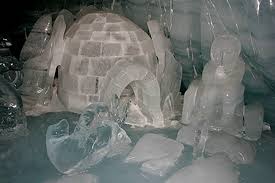
One of the most magical experiences at Jungfrau is a walk through the Ice Palace, a frozen world that feels straight out of a fairy-tale. Originally carved in the 1930s, this icy labyrinth lies deep within the glacier and is home to stunning crystal-like sculptures of eagles, penguins, and amphorae. Each shimmering figure transforms the icy grottoes into a breath-taking art gallery carved entirely from ice.
Right next door, the Alpine Sensation is a multimedia journey through time — honouring the pioneers who built the Jungfrau Railway. Lights, sounds, and visuals come together to create a moving tribute to both human effort and natural wonder.
“Deep within the glacier, where silence reigns and every breath feels like a whisper on ice, beauty takes the form of frozen art.”
🚡 Ride the World’s Most Modern Gondola
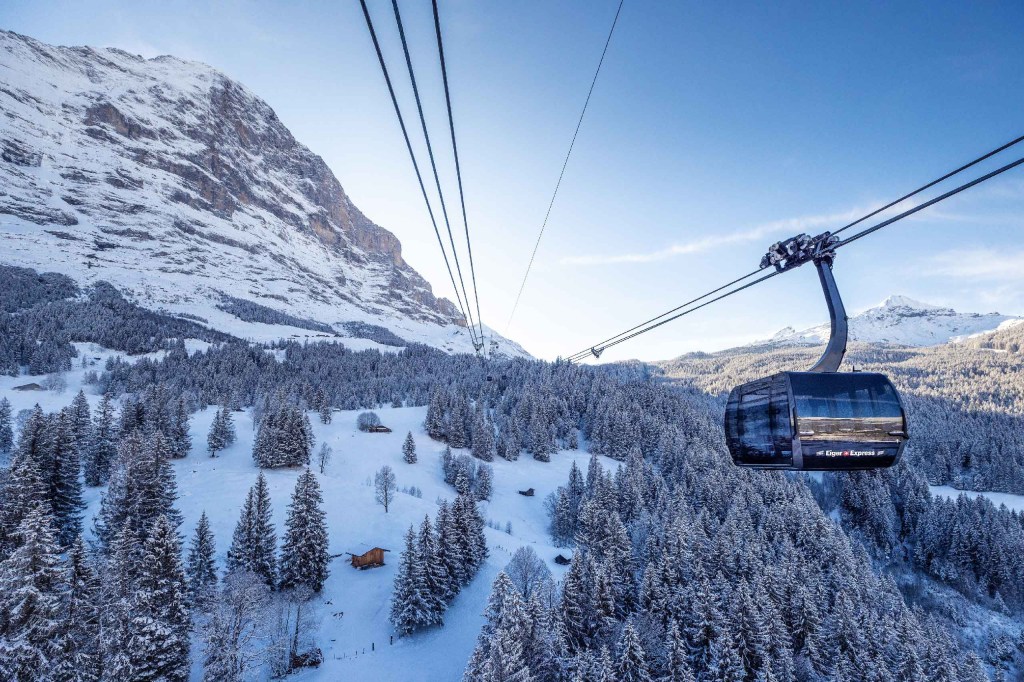
The journey to Jungfrau is as impressive as the destination. The Eiger Express, the world’s most advanced tricable gondola, whisks you up from Grindelwald Terminal to the Eiger Glacier in just 15 minutes. From there, you transfer to the historic cogwheel train, which climbs through the mountain to the highest railway station in Europe.
The views from the gondola are absolutely breath-taking — a sea of ice, sky, and snow stretching endlessly into the distance. Sharing below a few snapshots from this unforgettable adventure.
🕰️ Tips for Senior Travelers
🧥 Dress Warmly – Even in Summer
Even though you may start your journey in warm sunshine, by the time you reach Jungfrau (over 11,300 feet above sea level), the temperature drops sharply. It often hovers around -7°C to -8°C, even in the months of May or June. Be sure to pack:
A thick winter jacket or parka
Gloves, a hat, and a scarf
Waterproof shoes or boots with good grip (the glacier area can be icy)
Sunglasses – the reflection from the snow can be intense
🏔️ Altitude Awareness – Go Slow and Steady
Due to the high altitude, some visitors may experience mild symptoms of altitude sickness such as dizziness, shortness of breath, or fatigue. The key is to:
Walk slowly and take frequent breaks
Avoid heavy meals or intense activity right away
Drink water to stay hydrated
If you feel unwell, there are medical facilities and staff available at the top
💡 Tip for seniors: Let others go ahead and enjoy the pace of the journey — Jungfrau is not a place to rush through!
🌼 Best Time to Visit – May to June
The late spring and early summer months (May and June) are ideal times to visit Jungfrau. Here’s why:
The weather is more stable
The snow is still beautifully fresh on the peaks
Visibility is generally excellent for glacier and mountain views
Slightly fewer tourists than in peak July–August season
Plus, the lower valleys are filled with blooming flowers — making the train ride up even more scenic.